The beauty industry moves slowly. That isn't an insult. It's just true. When I started making videos on YouTube about my acne well over a decade ago, the brands I was talking about were still buying TV commercials and full-page magazine spreads. They weren't paying attention to a teenager with a camera. Then they were. And then more attention than I knew what to do with.
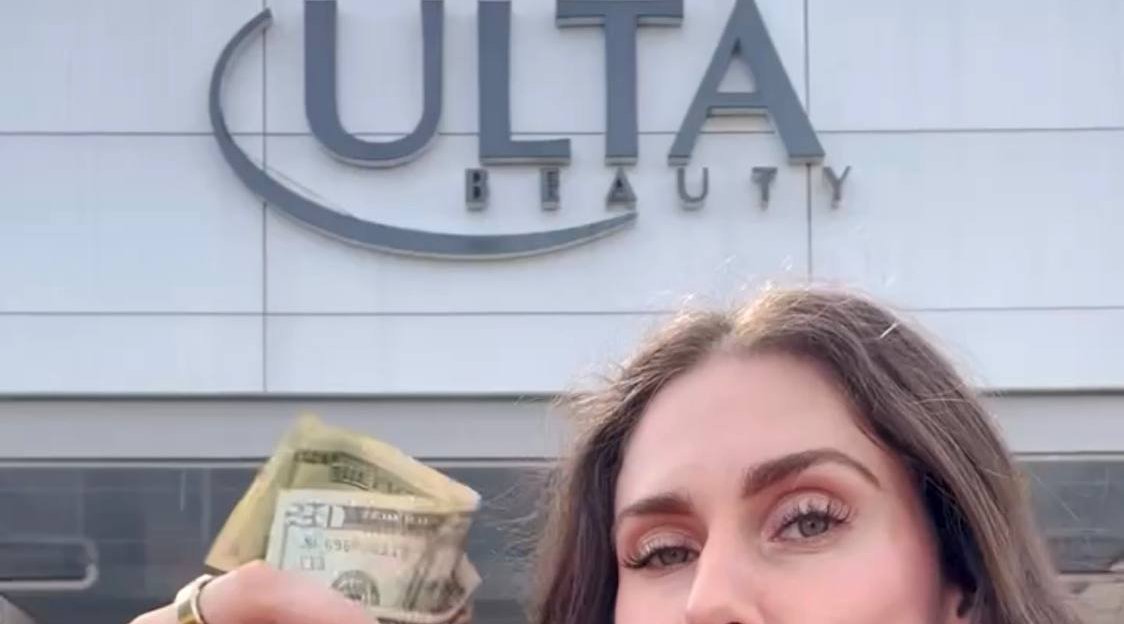
I mention that because a recent report from Glossy, covering their annual E-Commerce Summit in Miami Beach, put executives from Ulta Beauty, Tarte, and Beekman 1802 on stage to talk about how they're actually using AI in their daily operations. My honest reaction: I'm not surprised these brands are doing it. I'm surprised the conversation has matured this fast.
What "implementing AI" actually means for a beauty brand
This is where I want to push back on how the story usually gets told.
When brands say they're implementing AI, that phrase can mean almost anything. It can mean a junior marketer has a ChatGPT tab open for caption drafts. It can also mean an enterprise platform scoring 40 million customer profiles against predictive churn models. The distance between those two things is enormous.
Ulta Beauty has the data infrastructure to do the second kind. They've a loyalty program with more than 40 million active members. That isn't a CRM list. That's a live behavioral dataset. When a company that size talks about AI in workflows, they're talking about what happens when you plug real purchase history, browsing patterns, and product affinity data into a system that can respond faster than any human team. That's a genuinely different conversation than what a 20 person brand can have.
Tarte sits in an interesting middle position. They built their reputation on social, on real people wearing real product, and they've used that to scale. AI in their workflow likely touches influencer identification, content performance prediction, and probably some version of product demand forecasting. Those are the use cases that make sense when your business is built on real time cultural response.
Beekman 1802 is smaller, and they've always been willing to bet on a format before it felt safe. They famously went deep on QVC at a time when direct response felt old-fashioned, and it worked. So it wouldn't surprise me if they're using AI in ways that feel a little ahead of the curve for their size category.
The trap most beauty brands fall into with AI
After 17 years watching this industry adopt new tools, I keep coming back to the same observation.
The brands that get burned are the ones that use AI to replace judgment, not to support it. I saw this play out with influencer marketing when the first wave of performance analytics platforms came in. Brands started scoring creators entirely on reach and engagement rate. They cut the ones who didn't hit benchmarks. They signed the ones who did. And a meaningful number of those high performing accounts turned out to be inflated, or to have audiences with zero interest in buying beauty products.
The data was real. The judgment behind it was absent.
AI is going to create the same failure mode, just faster. A brand that uses an AI tool to generate three months of social captions in an afternoon and then ships them without anyone asking whether they sound like the brand, whether they're accurate, whether they would embarrass anyone, is going to publish something embarrassing. Guaranteed. The speed is real. The risk of skipping human review is also real.
The other trap is shiny object chasing. I watched this happen with YouTube Shopping when it first opened up. Brands rushed to tag products in videos without thinking about whether the video was the right placement, whether the creator's audience was a buyer audience, or whether the checkout experience even held up. I wrote about this at length in my piece on YouTube Shopping strategy for beauty brands, and the core lesson applies here too: a tool is only as good as the strategy behind it.
What's actually working
The brands furthest ahead are starting with workflow, not with content generation.
Product teams using AI to synthesize customer review data at scale. Buying teams using demand forecasting to cut overstock on SKUs that historically sit. Operations teams using it to catch supply chain anomalies early. These are unglamorous use cases. They're also the ones that compound.
Content generation is the loudest use case and often the least impactful one. If an AI generated caption saves a social manager 20 minutes but the brand still has to fully rewrite it before anyone approves it, that isn't a workflow improvement. It's a first draft machine with extra steps.
The brands getting real return are the ones using AI inside systems where speed and scale matter, with human review happening at defined checkpoints. Not everywhere. Not nowhere. At the right gates.
What this means if you're a smaller brand
Don't benchmark yourself against Ulta. A 40 person brand doesn't have Ulta's data or engineering capacity, and chasing those use cases with a fraction of the resources leads to expensive nothing.
The better question to ask: where in my current workflow am I making decisions with bad data, slow data, or no data? Start there. That's where AI actually helps. And when you find that answer, the influencer ROI framework I put together applies directly here too, because measuring whether any new investment is paying off requires the same discipline whether it's an influencer contract or an AI platform subscription.
The beauty industry will adopt AI. It already is. The brands that come out ahead will treat it as decision support and keep a human in the loop for anything that touches the customer. The ones treating it as a shortcut to skip the thinking are going to find out the hard way.
I've been watching this industry long enough to know which side of that line the smart money is on.